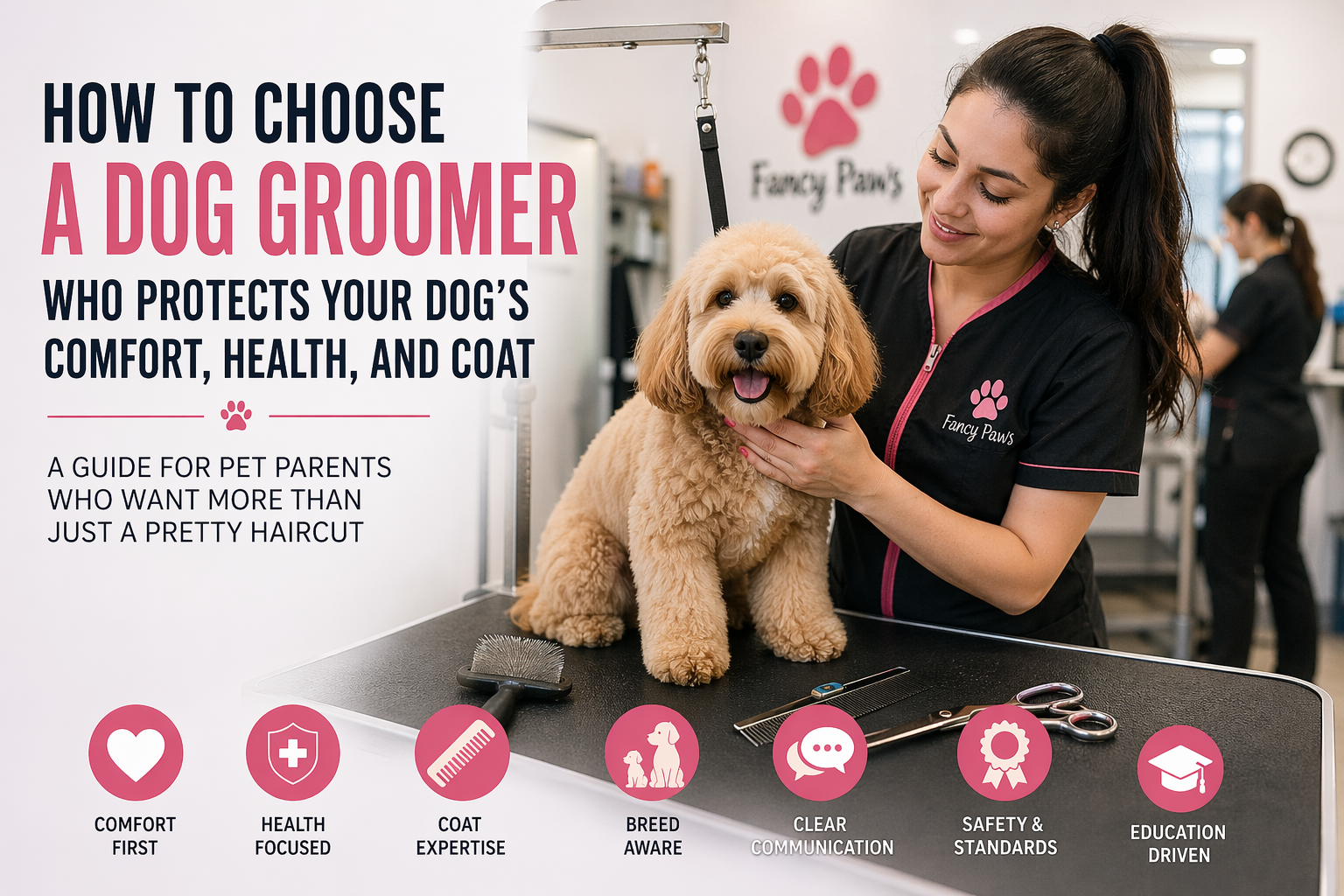
Choosing a groomer is not just about finding someone who can make your dog look tidy for a few weeks. A great groomer affects your dog’s comfort, coat quality, skin health, stress level, and even long-term mobility. A poor grooming experience can leave a dog anxious, overhandled, matted, nicked, or pushed through a routine that does not fit its coat type, age, or physical condition. That is why thoughtful pet owners should evaluate grooming providers with the same care they would use for a daycare, trainer, or veterinarian referral.
This guide is designed for owners who want more than a quick trim. You will learn how to judge grooming standards, understand which coat and skin issues require professional help, decide when home maintenance is enough, and recognize the signs of a salon that takes safety seriously. You will also see why a strong grooming culture often overlaps with education, training standards, and transparent handling practices.
Whether you have a poodle that needs regular shaping, a doodle prone to hidden matting, a senior dog that cannot stand comfortably for long periods, or a short-coated dog with skin irritation, the right grooming relationship should feel informed, calm, and consistent. The best salons do not just groom dogs. They help owners understand what their dogs actually need.
That difference matters because grooming is not vanity. It is maintenance, prevention, and comfort care wrapped into one routine.
What a Trustworthy Groomer Is Really Responsible For
Owners often focus first on the haircut, but haircut quality is only one part of the job. A trustworthy groomer is responsible for reading coat condition, adjusting tools to the dog’s tolerance, recognizing when the skin needs special handling, and pacing the appointment around the dog’s physical and emotional limits.
A professional groomer should be able to explain why a coat was clipped shorter than expected, why a de-matting session may not be humane, why nails must be addressed gradually in some dogs, or why a dog with severe irritation may need a medicated wash instead of standard shampoo. That level of communication is a sign of real judgment, not salesmanship.
Good grooming also protects future coat quality. For example, improper brushing on curly or dense coats can create breakage and hide mats near the skin. Rushed drying can leave moisture trapped in the coat. Inconsistent sanitary care can create discomfort and hygiene issues. Overgrown nails can change gait and stress joints. A skilled groomer understands how each small detail affects the dog beyond the appointment itself.
How Coat Type Should Shape Your Grooming Schedule
No grooming plan makes sense unless it starts with coat type. A short-coated dog, a double-coated dog, and a curly-coated dog do not need the same schedule, tools, or maintenance.
Short-Coated Dogs
Short-coated breeds may need fewer full haircuts, but that does not mean they are low-maintenance in every way. They still benefit from bathing, deshedding support, nail care, ear checks, and skin monitoring. Many owners underestimate how much dead coat, dander, and oil buildup can affect comfort.
Double-Coated Dogs
Breeds with a dense undercoat often need structured brushing, controlled deshedding, and coat-preserving bathing and drying routines. They should not be treated as if a shave is the default answer to shedding. A groomer who understands undercoat management will protect the coat’s natural function instead of taking shortcuts.
Curly and Continuously Growing Coats
Poodles, doodles, bichons, and similar coat types often need the most disciplined schedule. Their coats mat easily, especially in friction zones like the ears, armpits, chest, collar line, tail base, and legs. These dogs usually require consistent brushing at home and routine professional appointments to keep the coat manageable and humane.
Wire and Specialty Coats
Some coats need breed-aware techniques rather than generic clipping. If a groomer cannot explain how they approach your dog’s specific coat, that is a problem. Owners should expect more than a one-size-fits-all service menu.
Breed-Specific Grooming Matters More Than Many Owners Realize
Breed-specific knowledge is not about perfectionism. It is about function. Coat density, curl pattern, face shape, eye sensitivity, skin folds, paw structure, and the dog’s tolerance for table time all affect the grooming plan.
Poodles often need precise coat management to prevent dense matting close to the skin. Doodles require honest conversations because their coats vary widely and many owners are told they are “easy” when they actually need significant upkeep. Bichons need fluff maintenance and careful drying technique. Shih Tzus may need extra face hygiene and eye-area awareness. Huskies and other heavy-coated breeds need respectful coat management rather than unnecessary stripping or shaving.
A strong salon will talk you through realistic maintenance. Sometimes that means recommending a shorter trim for comfort. Sometimes it means teaching you what line brushing looks like between visits. Sometimes it means refusing a style request that would not be humane for the current coat condition. The best answer is not always the prettiest one on day one. It is the one that gets the dog back to a healthy starting point.
When a Dog Needs Professional Grooming Instead of Home Care
At-home care is valuable, but owners should know when they are past the point of casual maintenance. A dog may need professional grooming when the coat begins clumping, brushing causes pain, debris is trapped near the skin, nails click loudly on the floor, ear hair or wax becomes noticeable, or the sanitary area is difficult to keep clean.
Another common sign is behavioral resistance. If your dog starts dodging the brush, pulling away when paws are touched, or reacting when certain areas are handled, the issue may not be stubbornness. It may be hidden matting, overgrown nails, skin irritation, or accumulated discomfort.
Professional grooming also becomes important when the owner cannot safely complete the work. Drying thick coats properly, trimming around sensitive areas, clipping nails on a fearful dog, or working through heavy undercoat buildup can exceed what many owners should attempt at home.
Home care should support professional care, not replace it in situations that call for trained handling.
Skin Conditions a Careful Groomer Should Recognize
One of the clearest differences between a basic bath-and-trim provider and a quality grooming team is the ability to notice skin problems early. Groomers are not veterinarians, but experienced professionals often spot warning signs before an owner does because they work hands-on through the entire coat.
Hot Spots and Irritation
Moist, inflamed areas can worsen quickly if hidden under dense fur. These should never be ignored or aggressively scrubbed.
Dermatitis and Chronic Sensitivity
Dogs with recurring itchiness, redness, or flaky patches may need a medicated bathing approach and careful product selection. A salon that uses the same shampoo on every dog is missing important nuance.
Ringworm Concerns
Because ringworm can be contagious and requires proper hygiene protocols, a groomer should know when to pause and advise the owner to seek veterinary guidance.
Allergy-Related Skin Stress
Dogs with seasonal or food-related skin issues may benefit from thoughtful bathing frequency and products designed to calm the skin barrier instead of stripping it.
Owners should ask how the salon handles dogs with skin conditions, what products they use, and when they recommend veterinary follow-up. Vague answers are a red flag. So is any provider that dismisses obvious irritation as normal.
Matting Is a Welfare Issue, Not Just a Cosmetic Issue
Many owners do not realize how serious matting can become. Matting pulls on the skin constantly. It traps moisture, dirt, and bacteria. It restricts airflow, hides sores, and can make movement painful. In severe cases, it affects the dog’s ability to walk comfortably or lie down without pressure.
That is why humane groomers do not treat heavy de-matting as a badge of honor. They assess whether the coat can be saved without causing unnecessary pain. Sometimes the kindest solution is a reset clip, followed by a better maintenance plan.
Owners should be cautious of salons that promise to preserve any style no matter the condition of the coat. That promise may sound convenient, but it can place appearance above welfare. A professional who explains the tradeoff honestly is protecting your dog.
Strong groomers also teach prevention. They will show you which tools matter, how often to brush based on coat type, and where mats typically form first. Education is often the missing link between a frustrating appointment cycle and a manageable routine.
What to Ask Before Booking a First Appointment
A first appointment should not feel like buying a mystery package. Owners should ask practical questions that reveal how the salon thinks.
How do you handle nervous, senior, or special-needs dogs?
The answer should include pacing, comfort, patience, and realistic handling—not just “we do them all the time.”
Do you tailor grooming based on coat type and condition?
You want evidence that your dog will not be treated through a preset routine.
What is your policy on vaccinations and health screening?
A quality salon should have clear safety requirements. This protects all pets in the environment.
Can you explain what happens if my dog is matted or has skin irritation?
Transparent salons have established protocols and communicate them in advance.
Can owners see how pets are treated?
Some owners value visibility because it builds trust and lowers uncertainty. Open-concept environments can be especially reassuring.
If the answers feel rushed, defensive, or unusually sales-driven, keep looking. The right salon welcomes informed questions because informed owners tend to be the best long-term clients.
Red Flags That Suggest a Low-Quality Grooming Provider
Some warning signs are obvious, while others show up only after you know what to look for.
No Meaningful Questions About Your Dog
If a salon does not ask about age, coat issues, skin sensitivity, behavior, health history, or grooming goals, they may be working too generically.
Unclear Pricing With Vague Add-Ons
Transparent pricing signals organized operations. Confusing quotes often create distrust later.
Dismissive Communication
If the staff seems annoyed when you ask about handling, timing, or coat care, that attitude may show up in how they manage dogs too.
Unrealistic Style Promises
Any groomer who guarantees a fluffy designer finish on a severely matted coat without discussing welfare is prioritizing the sale.
Poor Explanation of Safety Standards
Vaccination requirements, intake screening, and pet handling policies should not sound improvised.
No Interest in Owner Education
The strongest providers help owners succeed between appointments. Silence on maintenance usually leads to repeated coat problems.
A trustworthy groomer does not have to be flashy. They do have to be clear, prepared, and humane.
How Grooming Needs Change for Puppies, Seniors, and Dogs With Disabilities
Not every dog can tolerate grooming the same way. Age, pain level, mobility, hearing, vision, and medical history all matter.
Puppies
Puppy appointments should focus on positive exposure, gentle handling, and skill-building. Early grooming is not just about appearance. It teaches the dog that touch, tools, and table work are safe.
Senior Dogs
Older dogs may struggle with long standing periods, joint stiffness, anxiety, and temperature sensitivity. They often need shorter sessions, more breaks, softer handling, and careful positioning.
Dogs With Disabilities or Special Handling Needs
These dogs may require extra time, adaptive support, and an individualized plan. The best salons will not treat them as an inconvenience. They will adjust the process around what the dog can reasonably handle.
If your dog falls into one of these groups, ask specifically how appointments are modified. Generic reassurance is not enough. The groomer should be able to describe what changes in practice.
Nails, Ears, Paws, Sanitary Care, and Dental Awareness Are Not Extras
Owners sometimes think only of haircuts, but comfort-focused grooming pays close attention to the smaller tasks that affect daily quality of life.
Nail Care
Long nails change posture and can make walking uncomfortable. Some dogs need gradual shortening over multiple visits, especially if the quick has grown out.
Ear Care
Ears need observation for debris, odor, sensitivity, and moisture problems. Groomers should know the difference between routine maintenance and something that needs veterinary evaluation.
Paw Care
Paw pads collect hair, debris, and moisture. Trimmed, clean paws help traction and reduce slipping, especially for seniors.
Sanitary Care
Clean sanitary trimming reduces mess, discomfort, and hygiene issues, particularly in long-coated dogs.
Dental Awareness
Groomers are not a substitute for veterinary dental care, but they often notice odor, sensitivity, or visible buildup that owners should follow up on.
These details are not “upsells” when handled properly. They are part of a complete maintenance mindset.
Why Transparency Changes the Owner Experience
One of the biggest trust builders in grooming is transparency. Owners feel more confident when they understand how pets are handled, what the salon noticed during the appointment, what services were actually performed, and what maintenance needs attention before the next visit.
This is where salon design and communication style matter. An open-concept environment can make a major difference for owners who want reassurance that their pets are being treated with patience and care. It also encourages accountability because visibility changes behavior.
Transparency matters after the appointment too. A good groomer explains coat findings, skin concerns, matting levels, and realistic recommendations. Instead of pushing guilt or upselling, they help you make a practical plan. That kind of clarity reduces surprises and helps owners budget both time and effort more effectively.
For owners seeking a Pet Grooming Salon in Chicago, transparency is one of the easiest ways to separate a trust-based provider from a volume-driven one.
What a Strong Grooming Education Culture Looks Like
Even if you are booking grooming for your own dog and not planning a career change, training culture still matters. Salons connected to serious education often develop stronger habits around technique, safety, observation, and professionalism because they are teaching standards rather than relying on shortcuts.
A strong grooming education culture includes supervised hands-on learning, respect for breed and coat differences, sanitation discipline, humane handling, and honest communication with owners. It should not reduce grooming to speed alone. It should teach judgment.
This matters for aspiring professionals too. People considering the industry should look beyond marketing language and ask what they will actually learn. Will they study coat handling, skin awareness, safe tool use, pet behavior, sanitation, and client communication? Will they work with real dogs under structured guidance? Will the program prepare them for the realities of grooming, not just the image of it?
Anyone researching a Grooming School In Chicago should look for training that combines technical skill with welfare-focused decision-making. The best programs prepare future groomers to protect both appearance and comfort.
How to Compare Salons Without Getting Distracted by Marketing
Owners often compare salons by photo galleries alone, but polished images do not tell you how a dog was handled, how long the appointment took, whether the coat was matted beforehand, or how the dog felt during the process.
A better comparison framework includes five areas: communication, coat knowledge, safety standards, handling philosophy, and follow-up guidance. Ask yourself whether the salon explains things clearly, whether they understand your dog’s coat, whether their intake and health requirements sound organized, whether they care about comfort rather than speed alone, and whether they help you maintain results at home.
Price matters, but context matters more. A lower ticket may come with rushed work, limited observation, weak coat preservation, or inconsistent handling. A higher price is only justified when it reflects real skill, safety, and service quality. The goal is not to overpay. It is to understand what you are paying for.
Building a Realistic Between-Appointments Routine at Home
The best grooming relationships extend beyond the salon. Owners who succeed long term follow a simple home plan that matches the dog’s coat and tolerance.
Brush With Technique, Not Just Frequency
Line brushing is often more effective than casually skimming over the top of the coat.
Check Friction Zones Regularly
Behind the ears, under the collar, armpits, tail base, and inner legs are common trouble spots.
Keep Nails on Your Radar
Do not wait until gait changes or floors start clicking loudly.
Watch for Skin and Ear Changes
Redness, odor, scratching, and moisture should be noticed early.
Book Before Things Become Urgent
Routine scheduling prevents the coat from reaching a point where your only humane option is a reset shave.
A realistic home routine is not about turning every owner into a professional groomer. It is about preventing avoidable discomfort and keeping the next appointment productive rather than corrective.
FAQ
How often should most dogs be professionally groomed?
It depends on coat type, lifestyle, skin condition, and home maintenance. Curly or continuously growing coats often need more frequent professional care than short-coated dogs.
Is shaving a matted dog always bad?
No. In many cases, shaving a severely matted coat is the kindest and safest choice. The important question is whether the groomer explains why it is necessary and how to prevent the problem next time.
Can I handle all grooming at home if my dog hates salons?
Some maintenance can be done at home, but many dogs still need professional support for matting, nail care, deshedding, sanitary trimming, or skin-related bathing. A careful groomer may also help your dog build tolerance gradually.
What should I do if my dog has itchy skin?
Ask whether the salon offers medicated or therapeutic bathing options and whether they recommend veterinary follow-up. Persistent itchiness should never be brushed off as normal.
What makes a grooming school worth considering?
Look for structured hands-on learning, humane handling standards, breed and coat education, safety protocols, sanitation discipline, and honest preparation for real client work.
Wrap-Up
Choosing the right groomer is really about choosing a care standard. The right provider understands coat type, adjusts to the dog in front of them, communicates clearly, and protects comfort at every stage of the appointment. They do not hide behind vague language, unrealistic promises, or one-size-fits-all routines.
When you evaluate grooming through the lens of comfort, skin health, handling quality, and long-term maintenance, better decisions become easier. You stop chasing appearances alone and start looking for evidence of judgment, patience, and professionalism.
That is what turns grooming from a stressful errand into a dependable part of your dog’s wellness routine.
About Fancy Paws
Fancy Paws is built around a transparent, owner-aware approach to grooming. Its open-concept salon helps pet parents see how their dogs are treated, reinforcing trust and accountability. The team emphasizes breed-specific grooming, therapeutic bathing options for skin concerns, and tender-care handling for puppies, senior dogs, and pets with special needs.
Fancy Paws is led by a philosophy that values humanity over vanity, recognizing that the dog’s physical and emotional comfort comes before cosmetic trends. Lead groomer Evelyn Mendoza and the team focus on practical results, clear communication, and safe standards that support long-term coat health.
Beyond salon services, Fancy Paws also supports the next generation of professionals through its in-house grooming academy, helping raise the quality of grooming education through hands-on, real-world training.